
To stand on the Opernring and look at the Vienna State Opera is to see more than just a magnificent building. You’re witnessing the very soul of Vienna, cast in stone. This isn’t merely a venue for music; it's a stage where the city’s history, ambitions, and identity have been performed for over 150 years.
The Soul of Vienna: A Stage for History
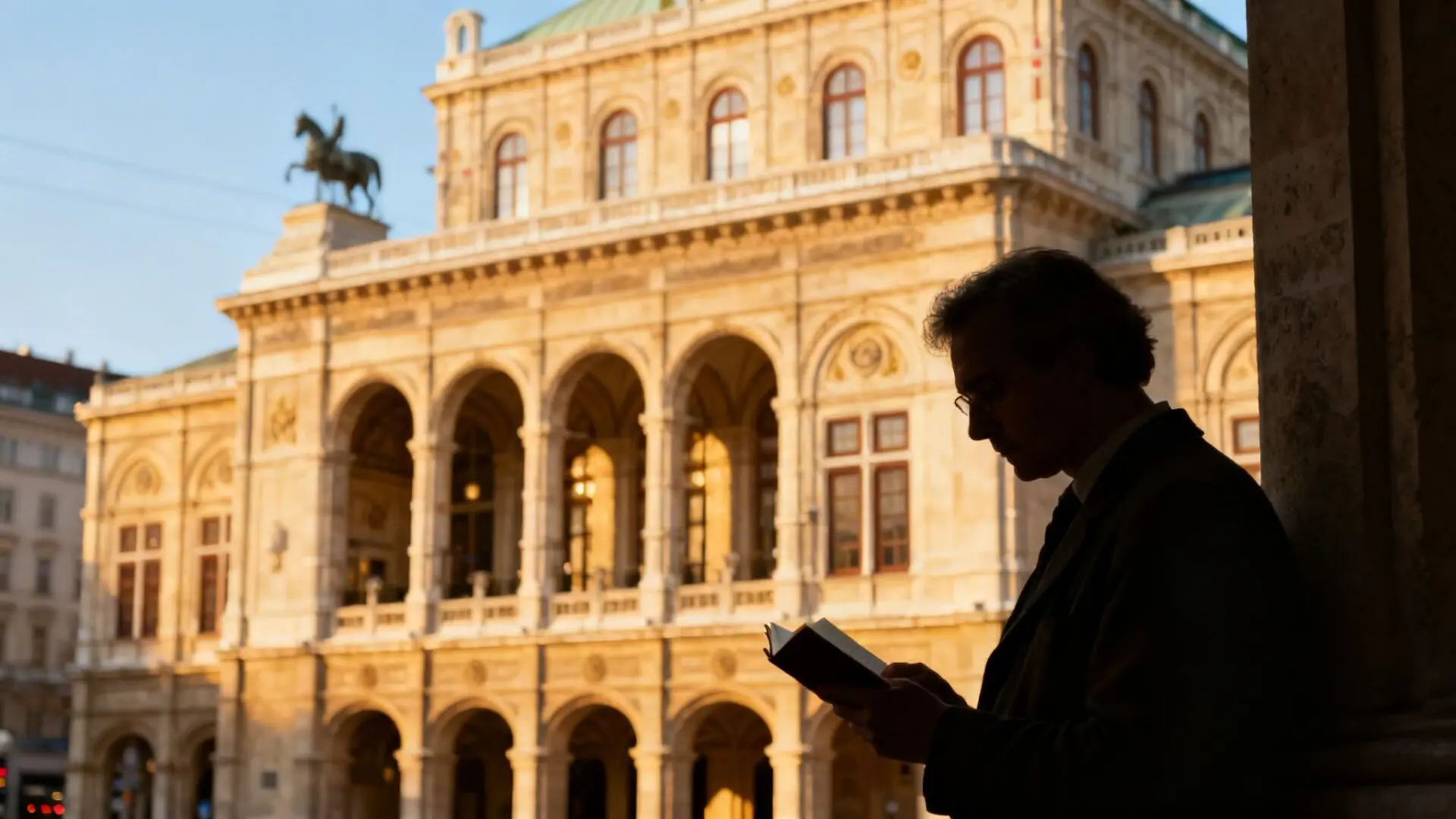
The story of the Wiener Staatsoper is inextricably linked to the creation of the Ringstrasse itself. When Emperor Franz Joseph I ordered the old city walls torn down in 1857, he cleared the path for a grand boulevard designed to showcase the power and cultural prowess of the Habsburg Empire. The Opera was to be its first, and most glorious, architectural statement.
From its very conception, the opera house was designed as a temple to the art form. In Vienna, opera has never been simple entertainment; it is a pillar of cultural life, and this building was intended to be its grandest stage. It immediately became a symbol of imperial pride and a social hub where the city's elite came to see and be seen, a tradition that continues in a more democratic form today.
A Mirror of Vienna's Identity
The building’s own story is a poignant reflection of Vienna's—marked by triumph, tragedy, and astonishing resilience. Its history has been shaped by legendary figures and the powerful historical currents that defined the city’s complex character. Consider the roles it has played:
- Imperial Showcase: It opened in 1869 with Mozart’s Don Giovanni in the presence of the Emperor himself, instantly establishing it as the centre of Vienna’s cultural universe.
- Artistic Crucible: Under visionary directors like the famed composer Gustav Mahler, it became a laboratory for innovation, pushing artistic boundaries and setting new standards for musical performance across the world.
- Symbol of Survival: The opera house was devastated by an Allied bombing in 1945. Its reconstruction and grand reopening in 1955 with Beethoven's Fidelio—an opera celebrating freedom—became a powerful symbol of Austria's rebirth after the devastation of war.
To understand the Vienna State Opera is to understand that in this city, music is not just an art form; it is a language of identity, a narrative of history, and a cornerstone of public life.
The building embodies the city's profound respect for high culture. It also captures Vienna's unique capacity to be both fiercely traditional and relentlessly modern. If you're curious about this legacy, you can learn more about why Vienna is called the capital of classical music in our dedicated article.
When you look past the magnificent Neo-Renaissance facade, you discover a place where the stories of composers, emperors, and everyday citizens converge. It is a living monument, where every performance adds another layer to Vienna’s rich, unfolding story.
From Imperial Dream to Post-War Rebirth

The Vienna State Opera was born from a cocktail of imperial pride and intense public scrutiny. As the first major public building slated for the new Ringstrasse, the stakes could not have been higher. An architectural competition was launched in 1860, with the winning design—a sweeping Neo-Renaissance vision by August Sicard von Sicardsburg and Eduard van der Nüll—chosen to project Habsburg cultural might.
Their plan was monumental, calling for elegant loggias and a façade dripping with artistic grandeur. But the notoriously critical Viennese public was not impressed. After construction began, the street level of the Opernring was raised by a metre, making the magnificent structure appear awkwardly sunken.
The Tragedy of Its Architects
The public backlash was merciless. The witty Viennese cruelly nicknamed it the "sunken treasure chest," and rumour has it even Emperor Franz Joseph I grumbled about the design. This relentless criticism took a terrible toll on its creators. Eduard van der Nüll, the sensitive artist behind the lavish interiors, hanged himself on April 3, 1868.
Just ten weeks later, his partner and close friend, August Sicard von Sicardsburg, died of tuberculosis—a condition many believed was exacerbated by a broken heart. Neither man lived to see their masterpiece completed, a profoundly tragic opening act for the building's own dramatic story. You can dive deeper into the trials faced by the architects of the Vienna Opera in our detailed account.
Despite this dark prelude, the grand opening on May 25, 1869, was a dazzling affair. Emperor Franz Joseph and Empress Elisabeth attended a performance of Mozart's Don Giovanni, officially placing the opera house at the heart of Vienna's musical world. For decades, it stood as a beacon of cultural supremacy, playing host to the world’s most celebrated conductors, singers, and composers.
Destruction and Resurrection
That golden age came to a fiery end in the final months of World War II. On March 12, 1945, an American bombing raid struck the building, and it went up in flames, leaving behind a smouldering shell. The inferno gutted the auditorium and stage, obliterating priceless sets and almost all of van der Nüll’s opulent decor. Miraculously, the main facade, the grand staircase, and the Schwind Foyer survived the blaze. For the Viennese, seeing their beloved opera house in ashes was a devastating blow to the city's soul.
The decision to rebuild was immediate and fiercely determined. This wasn't merely about restoring a building; it was about resurrecting a nation's spirit. The project became a powerful symbol of Austria's resolve to reclaim its identity.
Funds poured in from public donations and government coffers. For ten years, architects Erich Boltenstern and Otto Prossinger led the painstaking work of reconstruction. While they restored the surviving historic sections to their original splendour, they designed the new interior with a modern sensibility, focusing on state-of-the-art acoustics and technology.
On November 5, 1955, the Vienna State Opera opened its doors once more. The performance chosen for the occasion was Beethoven's Fidelio—an opera about liberation from oppression. Conducted by Karl Böhm, the event was broadcast across Austria on the nation's new television network, marking a moment of profound national pride and signalling Austria’s cultural rebirth in the Second Republic.
How to Experience an Evening at the Opera
Stepping inside the Vienna State Opera for a performance isn't just about attending a show—it's about participating in a cherished Viennese ritual. While an evening at the opera is a familiar custom for locals, the process can seem a little daunting to a first-time visitor. Let’s pull back the curtain on how it works, so you can feel less like an outsider and more like a regular.
Securing tickets for the Staatsoper is an experience in itself, with a structure designed to welcome everyone. This isn’t a closed-off playground for the wealthy; it’s an opera house for the people.
Securing Your Place
The most straightforward way to acquire tickets is through the official Vienna State Opera website. Booking directly is the best way to avoid third-party markups and ensure authenticity. Be aware that premieres and performances featuring world-famous singers can sell out months in advance, so planning is crucial if you have a specific performance in mind.
However, do not despair if you are a spontaneous traveller. One of Vienna’s most democratic cultural traditions is the sale of last-minute tickets. These can be returned seats or the legendary Stehplätze (standing room tickets), a truly local experience. These tickets go on sale on the day of the performance, offering an impromptu way to experience world-class art at a very accessible price.
To help you decide, it’s useful to understand your options. From plush velvet seats to the famous standing-room spots, there's an experience for every kind of opera-goer.
Vienna State Opera Ticket Options at a Glance
This table breaks down the main ticket types to help you choose the best fit for your budget and plans.
| Ticket Type | Price Range | Booking Advice | Best For |
|---|---|---|---|
| Premium Seats (Parkett, Logen) | High (€150+) | Book months ahead, especially for premieres or star-studded shows. | The full, classic opera experience with the best views and sound. |
| Category Seats (Galerie, Balkon) | Mid-range (€45 – €150) | Book several weeks in advance. Good availability for most repertory nights. | A fantastic balance of great views and more accessible pricing. |
| Restricted View Seats | Low (€15 – €40) | Check closer to the performance date. Look at the seating plan carefully. | Budget-conscious visitors who care more about the music than the view. |
| Standing Room (Stehplatz) | Very Low (€10 – €20) | Buy on the day of the show. You'll need to queue, but it's worth it. | Experiencing a vibrant local tradition and for music lovers on a tight budget. |
Each option offers a unique way to be part of the magic, whether you are splurging on a box or joining the dedicated fans in the standing area.
Dressing for the Occasion
The age-old question of what to wear is a common one, and the answer is wonderfully Viennese: it depends. While there isn't a strict dress code that's enforced with an iron fist, the grandeur of the occasion certainly invites a bit of effort. You won’t be turned away for dressing smartly, but appearing in shorts and a t-shirt will definitely feel out of place.
For a grand premiere or a festive New Year's performance, you’ll see the Viennese in their absolute finest—elegant evening gowns and black-tie attire. It's a wonderful excuse to participate in the glamour. For a standard repertory performance on a Tuesday night, however, smart casual is perfectly appropriate.
Think of it less as a rule and more as a sign of respect—for the artists, for the historic building, and for the art form itself. A jacket for men and a nice dress or trousers for women is a safe, appropriate choice.
Ultimately, what matters most isn't what you wear or where you sit. It's about immersing yourself in one of the city's most profound cultural experiences. Whether you’re in a premium seat or standing with the most passionate fans, you are part of a tradition that has animated Vienna for centuries. You are there for the music.
The Standing Room: A Viennese Institution
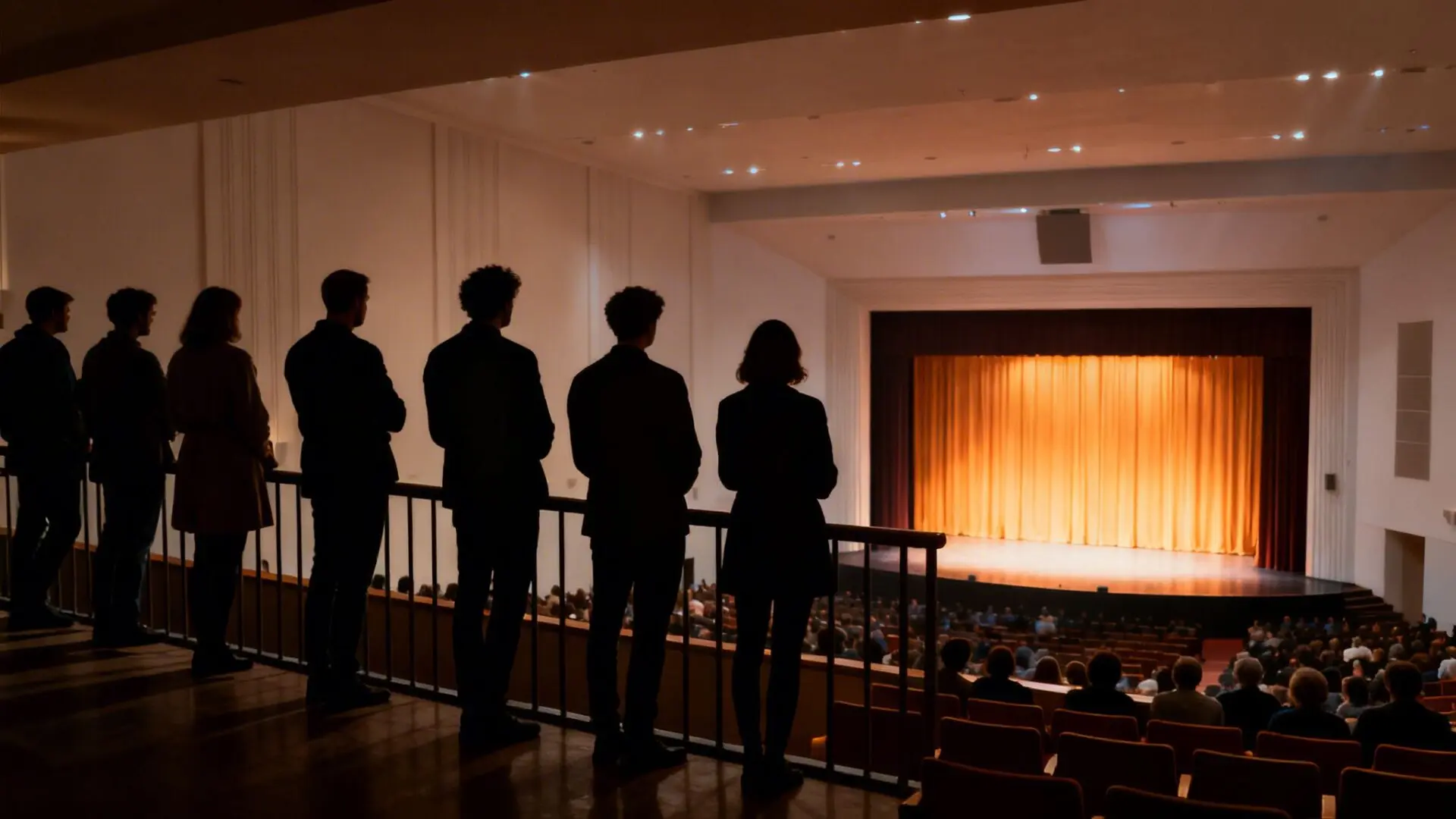
While most people picture the Vienna State Opera's opulent boxes and plush velvet seats, a far more democratic tradition thrives just behind them. This is the world of the Stehplatz, or standing room—a uniquely Viennese institution that makes a night at the opera accessible to absolutely everyone.
For just a few euros, anyone with a bit of patience can witness the same world-class performances as those in the priciest seats. This isn't just about a cheap ticket; it's a cultural rite of passage. The standing room possesses its own distinct culture, one built on a deep love for music and unwavering dedication.
The Passionate World of the Stehplatz Audience
The atmosphere in the standing room is electric, crackling with an intensity you won't find anywhere else in the house. This audience doesn't just watch the performance; they listen with an almost academic focus. They know every note of the score, every subtlety of a role, and they are never shy about showing their approval—or their disappointment.
A thunderous ovation from the Stehplatz is the highest praise a singer can hope for. Conversely, a wave of boos is a verdict that can echo through the city’s musical circles for days. The regulars here are often the most discerning and, at times, the most feared critics in the building.
This tradition has deep historical roots. For over a century, the standing room was a breeding ground for fierce fan communities known as Claquen, who rallied around their favourite star singers. These groups would attend every performance, showering their idols with applause and flowers while occasionally working to sabotage their rivals. While the formal Claquen have mostly faded, their passionate spirit endures.
The standing room embodies a core Viennese belief: great art should not be a luxury. It is a living testament to the idea that culture is a public good, an essential part of the city's soul that belongs to everyone, regardless of their station.
This democratic spirit is woven into the theatre's design. Today, the standing room accounts for a significant portion of the house's capacity, with 567 standing places available out of a total of 2,284. This creates a remarkable situation where a premium seat can cost fifty times more than a standing spot, a model that has made the Vienna State Opera's standing room a global phenomenon. You can find more details about this unique Viennese cultural tradition and its history.
A Shared Cultural Experience
For many young Viennese, a night in the Stehplatz is an initiation into the city's rich cultural life. It's where students, artists, and music lovers of all ages come together, united by a shared passion. The ritual of queuing for a ticket, claiming a spot with a scarf, and standing for hours is a communal experience.
This is where lifelong friendships are forged over a shared love for Verdi or Wagner. It’s where the next generation of opera aficionados is born. The Stehplatz is more than just a place to stand; it is the true beating heart of the Vienna State Opera, ensuring its legacy remains vibrant, dynamic, and genuinely for the people.
A Year on the World's Busiest Stage
The Vienna State Opera is not a grand, historical museum; it’s one of the most dynamic and hardworking stages on the planet. While most famous opera houses present a limited number of productions each year, the Staatsoper operates on a completely different model: a repertory system that keeps the curtain rising on a new production almost every single night.
This is no small feat. From September to June, the opera is in constant motion, staging an incredible 350 performances of more than 60 different operas and ballets. It's a relentless pace that makes it one of the world's busiest and most exciting venues for the performing arts.
The Legacy of Its Golden Ages
This burning artistic ambition was not born overnight. Its foundations were laid during the opera’s "Golden Ages," most notably under the revolutionary directorship of composer Gustav Mahler from 1897 to 1907. Mahler was a tireless perfectionist. He demanded higher standards from everyone—the singers, the orchestra, and even the audience, famously locking the doors to latecomers once a performance had begun.
Under Mahler’s command, the Vienna State Opera became a temple of artistic innovation. He worked closely with designer Alfred Roller to create productions where the music, drama, and set design merged into a single, unified aesthetic—a concept known as Gesamtkunstwerk. His tenure cemented the opera's world-class reputation, and his groundbreaking work redefined what was possible on stage. For a closer look into how the opera became such a cultural powerhouse, you can discover more about its prolific history on austria.info.
Later, another legend, Richard Strauss, stepped in and continued this tradition of excellence, ensuring the opera's place at the pinnacle of the musical world.
The Musicians and the Stars
Of course, the soul of any opera is its orchestra. Here in Vienna, that relationship is unique. The musicians in the orchestra pit are none other than members of the world-renowned Vienna Philharmonic. They split their time between the opera house and the concert hall, bringing a level of musicianship and a deep-rooted tradition that you can feel in every note.
Thanks to the repertory system, the stage is graced by a constantly changing cast of international opera stars. One night, you might see a world-famous soprano in La Traviata; the very next, a completely different cast takes over for a breathtaking performance of Tosca.
This constant rotation keeps the schedule fresh and exciting. It also reinforces Vienna’s status as a global crossroads for the greatest singers of our time, a place where rising talents share the stage with living legends.
To ensure this cultural treasure is available to everyone, the opera has found creative ways to share its magic. During the warmer months, a giant screen on Herbert von Karajan Square, right beside the opera house, broadcasts live performances completely free of charge. It’s a fantastic public spectacle, drawing hundreds of people to experience the magic under the stars and proving the Vienna State Opera is anything but a stuffy institution.
Exploring the Opera House Beyond the Stage

While the main event happens on stage, some of the Vienna State Opera’s richest stories are carved into its walls. To truly understand the place, one must walk its halls during the quiet of the day. A guided tour offers a backstage pass to history, revealing architectural secrets and historical layers you’d never notice during a bustling performance.
These tours lead you through rooms that are living artefacts of Viennese history. You’ll see exactly how the building connects its glamorous imperial beginnings to its modern, high-tech present.
Echoes of the Past
Remarkably, some of the most stunning parts of the original 1869 building survived the devastating bombing of 1945. When you climb the Grand Staircase, you are treading on the same marble that once supported emperors, composers, and Vienna’s high society. The entire space was designed to awe and impress, setting the scene for a grand night out.
Another jewel that endured is the Tea Salon. This was once Emperor Franz Joseph I’s private reception room, and stepping inside feels like walking into a time capsule of imperial splendour. It provides a powerful contrast to the auditorium, which was completely rebuilt in the 1950s with a pragmatic focus on acoustics and modern comfort. A tour is a fascinating lesson in these contrasts, where the ornate, romantic vision of the Habsburg Empire collides with the sleek, pragmatic spirit of the Second Austrian Republic.
Art Woven into Architecture
As you wander, you’ll realise the building itself is a gallery. In the Schwind Foyer, you will find the famous frescoes by Moritz von Schwind. These are not merely decorative paintings; they are masterful scenes from famous operas, including Mozart's The Magic Flute. They serve as a beautiful love letter to the very art form the building was created to house.
These details connect the Vienna State Opera to the city’s broader musical story. The operas depicted in the frescoes echo the works of composers like Mozart and Strauss, whose lives are entangled with Vienna’s identity. Seeing the scene from The Magic Flute is a reminder that Mozart’s spirit is present in every musical corner of this city.
By exploring the building, you're doing more than just seeing an empty theatre. You are tracing the footsteps of history and uncovering the deep roots connecting the city’s architecture, its artists, and its musical soul. To find out more about what you can see, take a look at our guide to tours inside the Vienna State Opera. A peek behind the curtain transforms the building from a simple venue into a living archive of Viennese culture.
Your Questions About the Vienna State Opera Answered
So, you’re planning an evening at the Staatsoper? Excellent. Before you go, you likely have a few practical questions. Let's clarify those final details so you feel like a seasoned regular from the moment you step inside.
How Long Does a Typical Performance Last?
Plan for a full evening. Most opera or ballet performances run between three to four hours, which almost always includes one or two intermissions. A grand, sweeping opera like Verdi's Aida will naturally be a longer affair than a more compact one-act piece.
The intermissions themselves are part of the experience, typically lasting about 20-30 minutes. This is your opportunity to stretch your legs, wander the magnificent foyers, and enjoy a glass of Sekt at one of the buffets—a tradition the Viennese have cherished for generations.
Is It Possible to Bring Children to the Opera?
Absolutely, and it’s a wonderful way to introduce them to its magic. The Vienna State Opera often stages productions specifically for younger audiences, such as a much-loved children's version of Mozart’s The Magic Flute. These are shorter, more accessible shows, but they take place in the same breathtaking hall.
For standard evening performances, simply consider your child’s ability to sit attentively for a long duration. A four-hour opera can be a significant challenge for little ones. The main principle is that all guests should be able to sit through the performance without disturbing others.
A fantastic family alternative is a guided tour. Children can absorb the sheer scale and beauty of the building without the need to sit still for hours. It’s an excellent way to plant a seed of curiosity for music and history.
What Happens If I Arrive Late for a Performance?
Punctuality is a point of pride here, a tradition dating back to the legendary conductor Gustav Mahler, who insisted on locking the doors the moment the music began. If you arrive late, you will not be permitted to enter the main auditorium until the first intermission.
You won't be turned away entirely, however. An attendant will typically guide you to a listening room where you can watch the performance on a screen. It’s a thoughtful arrangement that respects both the performers on stage and the late-arriving guests.
Are There English Translations Available During the Show?
Yes, and this feature makes the opera incredibly accessible to visitors from all over the world. Every single seat—and even the standing room spots—is equipped with its own small screen for subtitles, or "surtitles" as they are known in the opera world.
You can select from several languages, including English. This allows you to follow the libretto’s drama and emotion perfectly, ensuring you appreciate the full story. It’s a brilliant piece of modern technology that allows the music to connect with everyone, regardless of language.

